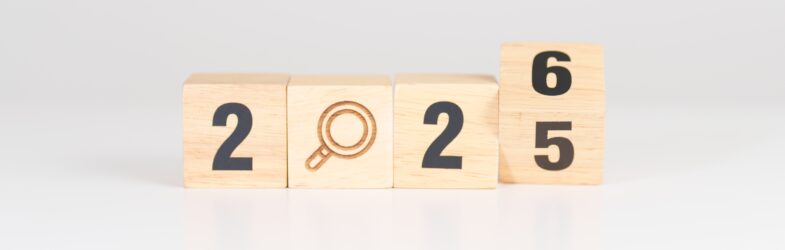
As we prepare to close out 2025 with data on the top trends that we’re watching for 2026, we’re taking a moment to reflect early on where executive leaders devoted the most attention.
From the impact of artificial intelligence to holiday season headwinds, here are the most popular articles of the year thus far.
At the end of each year, we first publish an article on the top trends we’re watching for the upcoming year and then another counting down our top ten most popular articles of the current year.
But the national landscape was a bit different this year. As we add new areas of inquiry to the National Awareness, Attitudes and Usage Study to keep our partners and readers informed given contemporary developments, we’ve found ourselves doing some reflecting. Instead of looking to the future and then reflecting on the biggest areas of interest at the close of the year, we’re switching gears.
As it turns out, many of our most popular articles this year scratched the surface of bigger trends impacting cultural institutions that we are watching moving forward – trends such as the impact of artificial intelligence, how Generation Z is shifting the cultural sector landscape, shifts in consumer confidence, and what it means to be “political.” (And is being so – or not – a good or bad thing?) We shared data touching on all of these topics, and we’re finding them to be valuable avenues for additional inquiry as we prepare for 2026. Many of them are new!
In the coming weeks, we’ll reveal the top trends we’re following as the calendar turns to 2026. But 2025 may have been a year of transition for the cultural sector landscape with new headwinds.
The list is telling. A count backwards of our top ten most popular articles reveals – in and of itself – where cultural executives are turning their attention as we prepare for 2026.
A note: IMPACTS Experience publishes market potential (expected daytime attendance) at the start and middle of the year. In a true top ten list, these two articles would be included at the fourth position. However, we’ve decided to exclude them from the lineup to instead shine a light on the top trends that were most of interest this year.
(A KYOB+ subscription is required to access the articles linked below. Not yet a subscriber? Sign up here!)
10) Democrats vs. Republicans: Do They Feel Differently About Cultural Organizations? (DATA)
Some may argue that our current period is among the most politically divided in American history. Despite all this, research shows trust remains high for museums and performing arts organizations. But do these perceptions differ when we segment the data by self-identified political affiliation? Do self-identified Democrats and Republicans hold different perceptions of museums and performing arts organizations when it comes to these organizations being apolitical, mission-driven, and welcoming? The data may surprise you – and it underscores the valuable role that cultural organizations play in their communities.
This article was so of interest to cultural executives that we worked with the American Alliance of Museums to share the research with their audiences as well.
9) Staff Interactions & Guest Satisfaction: What the Best Museums Do Differently (DATA)
For cultural organizations, optimizing guest satisfaction is a no-brainer. Research shows that higher guest satisfaction ratings correlate with repeat attendance, greater likelihood to receive endorsements, heightened likelihood of support – either philanthropic or by becoming a member – and overall ability to achieve market potential. While there are sadly no surefire “magic bullets” for elevating guest satisfaction, there’s one thing that IMPACTS Experience has uncovered that (still) comes closest.
Personal interactions between guests and staff members can meaningfully elevate the guest experience. Research suggests that the top fourteen most admired museums in the United States may approach personal interactions differently than other large organizations that welcome more than one million annual daytime visitors each year. Here’s the data on what they do differently.
8) Intentions to Visit Exhibit-Based Cultural Entities Are Down (DATA)
No matter who you love, the color of your skin, your political persuasion, or from where your family hails, we can hopefully find common cause and agreement with the idea that it was a very busy and, ahem, interesting first quarter in the United States. At the turning of the first quarter, IMPACTS Experience was able to dive into the large-scale data surrounding perceptions and behaviors related to cultural organization visitation given the many developments in the early part of the year.
This article examined how intentions to visit cultural entities changed for exhibit-based organizations and performing arts organizations, respectively, compared to the last two years. From there, we also contemplated a temporal near-time, post-pandemic trend analysis for eleven different organization types: aquariums, art museums, botanical gardens, children’s museums, history museums/sites, natural history museums, science museums/centers, zoos, live theater, orchestras, and other performing arts organizations.
7) Social Media Engagement for Cultural Entities by Generation (DATA)
By now, cultural executives understand that social media and digital engagement are critical for an organization’s success. Effective social media and digital engagement strategies are woven into the entirety of a cultural organization’s audience experience – both onsite and offsite – and extend far beyond the purview of marketing or public relations departments alone. Social media engagement impacts a variety of factors, from access barriers to trust perceptions to how welcome guests feel onsite.
Is it true that only millennials and Generation Z are active on social media? Of course not, and this has largely never been the case. But just how important is social media for different generations when it comes to motivating attendance to cultural organizations? Here’s the data.
6) How AI is Reshaping Visitor Engagement Strategies for Cultural Organizations (DATA)
Cultivating attendance for museums and performing arts organizations has fundamentally shifted. Gone are the days when prospective visitors relied solely on traditional search engines to discover museums, performing arts venues, aquariums, and historic sites. Today’s audiences increasingly turn to AI-powered tools like ChatGPT, voice assistants, and social media algorithms to research, plan, and discover cultural experiences.
At IMPACTS Experience, we’ve been monitoring these seismic changes in audience behavior and their implications for cultural organizations. The research reveals a transformation that extends far beyond marketing tactics – our visitors’ entire journeys, from initial awareness to onsite experiences, are being reshaped. For cultural executives, understanding these shifts isn’t just about staying current with technology, it’s about ensuring an organization remains discoverable and relevant in an AI-driven world.
From search behavior transformation to cookieless attribution challenges, here’s what cultural executives need to know about AI’s impact on audience acquisition and the evolving digital marketing landscape. The AI conversation isn’t going away – it’s only accelerating. And we need to be on this very important train before it leaves the station.
5) How Has Trust in Cultural Entities Changed? (DATA)
This year experienced an eventful start with the change in administration and its new mandates impacting many museums and performing arts organizations as consumer confidence plummeted and the government issued directives around inclusion initiatives. One of the most frequent questions we received was: “Do people still trust cultural organizations?”
This article examines the data parsed out by organization type, including aquariums, art museums, botanical gardens, children’s museums, history museums/sites, natural history museums, science museums/centers, zoos, live theater, symphony/orchestras, and other live performance organizations. It also includes segmentations by generational cohort.
We at IMPACTS weren’t sure what to expect as the data came in at the close of the first quarter, but it did in fact come with some good news…as well as the weight of responsibility.
4) Holiday Season Headwinds for Cultural Entities: Navigating a Transformed Leisure Landscape
Although this is one of our more recent articles, it shot to the top of our “most popular” list quickly. Leaders are wondering what data suggest they may expect in terms of attendance this holiday season. A quick look at the trends predicted to impact cultural organizations this holiday season provides meaningful insight into a small slice of what we’ve been seeing develop throughout the year.
There is no one singular condition contributing to the “season of compression” explained in this article. Instead, it is a confluence of factors. This article covered the paradox of 2025 – that travel is up, but cultural visitation is down – and outlined the macro-headwinds shaping attendance this upcoming holiday seasons, as well as how cultural organizations may adapt to these trends.
As it turns out, the scarcest resource in 2025 is not money. It’s attention.
3) Minding the Age Gap: Understanding Younger Members for Cultural Organizations (DATA)
Membership acquisitions and renewals are unique to each organization and their respective programs and offerings, but current conditions in the United States and within our own institutions have underscored some common challenges. On average, membership and subscription renewals were shaping up to be a bit “soft” this year for reasons related to consumer confidence, lower intentions to visit, and competing access programs. However, we noticed executive leaders asking tough questions and pressing onward. Chief among those questions are inquiries related to Millennial and Generation Z members.
Are cultural organizations engaging Millennial and Generation Z members and subscribers at representative rates relative to the population? What is the average age delta between visitors and members? How much does mission matter as a membership motivator?
This article has the answers.
2) Five Years Later, The Pandemic Has Still Shifted the Cultural Entities People Prefer to Visit (DATA)
During the height of the COVID-19 pandemic, we observed notable changes in preferences and behaviors related to cultural organization attendance. People began preferring to visit zoos, botanic gardens, and outdoor institutions over performing arts entities that didn’t allow for easy freedom of movement. By this time – over five years since the start of the pandemic – professionals may expect the demand for different cultural experiences to have long returned to pre-pandemic levels. In other words, one might think that the folks who once enjoyed going to the theater over the zoo would by now have returned to preferring the theater. However, in early 2023 we began to worry that for some organization types – particularly performing arts organizations, science organizations, and children’s museums – the new visitation patterns were proving durable.
Where are we now? Has interest in cultural organization types gone back to 2019 baseline values – or have the pandemic-era shifts continued to remain durable? This is another more recent article that shot up to the top of the list. In a nutshell, the pandemic embedded some new default habits and accelerated key trends in audience engagement.
1) Ticket Purchasing Frustrations are on the Rise. Here’s Why (DATA)
Ticket purchase challenges notably increased in 2024 for many cultural organization guests. Think twice before assuming that this article merely points out areas for independent ticketing systems to improve! These hassles may in fact be the fault of cultural organizations themselves.
Some organizations may internally attempt to rationalize and justify complicated purchasing processes that require multiple levels of user inputs and a confusing menu of options as acceptable. This is all too often because the products of these processes are ostensibly beneficial (“Look at all the great customer data we’re collecting!”). However, the evidence is compelling that our audiences are becoming increasingly less tolerant of these transactional inefficiencies. In fact, difficulty purchasing tickets is a notable and growing barrier to attendance.
People are used to spending less time navigating and completing online transactions. Folks now can – and do – buy many things with as little as one click or swipe. These expectations have implications for both exhibit-based and performing arts organizations. Here’s what leaders need to know about these growing frustrations and a key to overcoming them for exhibit-based and performing arts organizations.
Fear not, for we will be publishing the top trends we’re watching going into 2026 in mid-December! For now, as we take stock of 2025 in its final months and attempt to narrow in on key areas of interest to our partners, we’ve found this list helpful. We hope that you do as well. It shows where leaders looked to the data and the issues they most sought to understand this year.
In many ways, cultural organizations find themselves in a new landscape.
We look forward to sharing more data to inform your organization’s operations as we tackle the remaining months of 2025 and look to 2026.
Yours in expert analysis, real-time trends, and high-confidence research,
IMPACTS Experience